Blog
Which Fabric Is Best for Summer and Autumn T-Shirts?
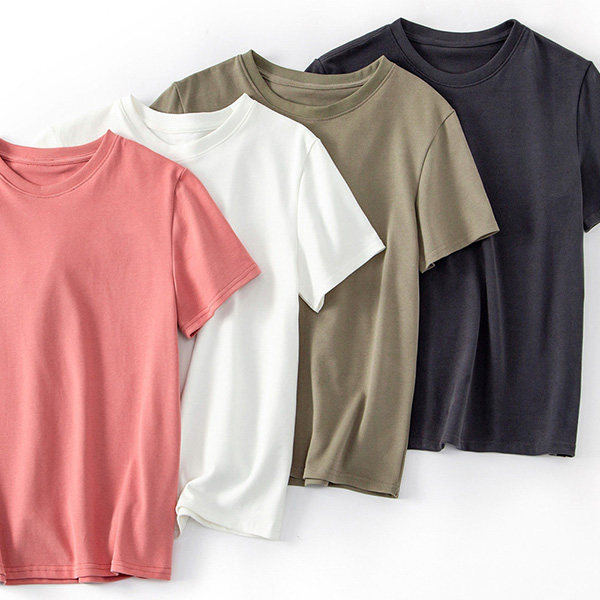
This is for everyone’s reference when choosing a T-shirt fabric that suits your skin best for summer and autumn.
Combed Cotton
The fibers of high-quality cotton are combed, giving the fabric a smoother, more even texture that resists pilling. It is soft yet sturdy, and retains all the advantages of pure cotton: a smooth texture, bright colors, suitability for printing logos and text, easy washing and quick drying, and moisture absorption with sweat wicking.
Linen-Cotton
Visually, it retains the unique rough, crisp style of linen fabric while also possessing the softness of cotton, improving linen’s shortcomings of being insufficiently fine and prone to fuzzing. Cotton-linen interwoven fabric is mostly woven with cotton as the warp and linen as the weft; it is firm and smooth, and feels softer than pure linen. Linen-cotton blended interwoven fabrics are mostly lightweight, with good moisture absorption and fast moisture release—cool to wear, not clinging to the body after sweating, and resistant to washing, making them suitable for summer clothing.
Mercerized Cotton
- Improved dyeing performance, bright color, and resistance to fading;
- Has the general luster of silk fabric;
- The fabric dimensions are relatively stable, with good drape; yarn strength is increased and not easily broken;
- The fabric is crisp, with good wrinkle resistance and resistance to pilling and creasing.
The disadvantages of mercerized cotton are:
- The process is complex and cumbersome, with a slightly higher cost.
- It is acid-sensitive—for example, vinegar. If it accidentally gets on the clothes, wash them promptly.
Lycra Cotton
- High stretch and good shape retention, no creasing;
- Soft and smooth to the touch, with the best elasticity; comfortable to wear and form-fitting;
- Resistant to acids and alkalis, abrasion, and aging;
- Good dyeability, and not prone to fading.
Modal
- The raw material comes from natural wood and can naturally degrade after use.
- Soft to the touch, with a bright, lustrous fabric surface; its drape is better than existing cotton, polyester, and rayon—it is a natural mercerized fabric.
- Its moisture absorption capacity is 50% higher than cotton fiber, keeping it dry and breathable. It is an ideal close-fitting fabric and health-care apparel product, beneficial to the body’s physiological circulation and health.
- Compared with pure cotton, it has better wrinkle resistance and non-iron performance.
- It has good dyeing performance and remains bright as new even after many washes, with good color fastness—free of the shortcomings of pure cotton clothing, which easily fades and yellows. Therefore, the fabric has vivid colors and stable wearing performance. After 25 washes together with cotton fabric, the hand feel will become harder the more it is washed, while Modal becomes softer and more beautiful the more it is washed.
Pure Cotton
- Good moisture absorption—under normal conditions, cotton fiber can absorb moisture from the surrounding atmosphere, with a moisture content of 8–10%, so when it touches human skin, it feels soft rather than stiff.
- Good moisture retention—cotton fiber has an extremely low thermal conductivity coefficient and is porous with high elasticity; a large amount of air can be stored between the fibers, so pure cotton textiles have good moisture retention, and wearing pure cotton garments makes people feel warm.
- Good heat resistance—below 110°C, it only causes moisture on the fabric to evaporate without damaging the fibers, making it very washable and durable.
- Healthy and harmless—cotton fiber is a natural fiber. Through extensive testing and practice, the fabric causes no irritation or side effects when in contact with the skin, and long-term wear is beneficial and harmless to the human body.
- Disadvantages—prone to wrinkling, deformation, and shrinking (shrinkage rate is 2% to 5%, except for specially processed or washed treatments).